|
The Australian War Memorial - September 4th 2015
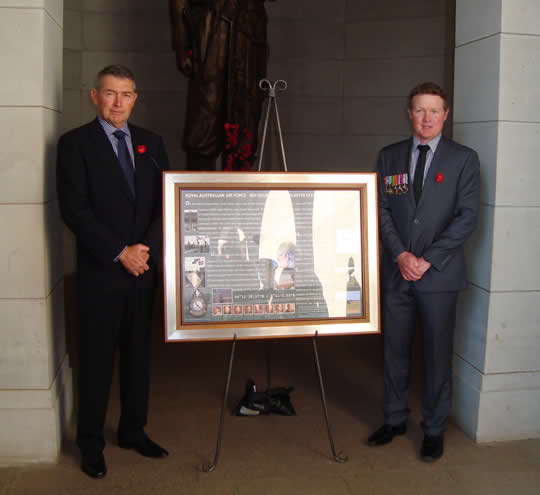
Pictured Above: Peter Forrester and RAAF 460 CO WGCDR Nathan Klohs with the Lancaster EE138 Panel, which is to be displayed in the Squadrons’ Digital Target Operations room. Presentation to RAAF 460 Squadron A presentation to RAAF 460 CO WGCDR Nathan Klohs of a panel containing information about the crash site of Flying Officer Sidney Forrester’s 460 Squadron Lancaster EE138 AR-E2 and final resting place of the crew was conducted on September 4th 2015 at 4:00 PM at the Australian War Memorial cloister in front of the names of those 460 Squadron crew members who lost their lives. This presentation preceded the Last Post Ceremony at 4:55 PM, a short speech was delivered by the nephew of Flying Officer Sidney Forrester and responded to by WGCDR Nathan Klohs; Good afternoon my name is Peter Forrester, Pictured: Mark Forrester & son William Forrester wearing SM Forrester’s service medals. On this day and date at this place of significance beneath the names of those Australian 460 squadron members who made the ultimate sacrifice, the family of one of those named, Flying Officer Sidney Forrester are pleased to provide this information panel to Wing Commander Nathan Klohs who receives it on behalf of the Royal Australian Air Force’s 460 squadron. We present this on behalf of all Lancaster EE138 crew family and relatives here today in Australia and those in the United Kingdom. The overview of the EE138 crash site combined with the narration of events was envisaged to be a depiction of the squadron’s ties between an historical event and the role of todays reformed 460 squadron. It is hoped that this panel will be displayed at the squadron in a befitting place for 460 squadron personnel to view at some point, during their time with the squadron. Perhaps in the future some squadron members will, if passing through that part of Jutland Denmark take a little time to visit a place that is not just significant to the families and relatives of the crew but is a focal point for so many of the local Danish community.To assist in such future journeys and in a format that will be familiar, the exact pin point address of the site has been included on the panel. The Stadil community to this day tell of their gratitude, the tragedy and sacrifice made by the 8 crew on board their Lancaster, 7 of who still remain at the crash site which is cared for by the Stadil locals. A further sign of this care is evidenced in the form of a memorial stone paid for by a local collection and unveiled on May 5th 1950 – marking Denmark’s fifth year of liberation. Bronze plaques articulating in three languages details of the crew, their loss and 460 squadron statistics, were made possible through the support of the Office of Australian War Graves Overseas Memorials. In a short time from now perhaps we will hear more of the story as an element of the Last Post Ceremony oration.
Last Post Ceremony Commencing at 4.55 pm Australian Eastern Standard time, the Australian War Memorial in Canberra farewells visitors with its moving Last Post Ceremony. The ceremony begins with the singing of the Australian National Anthem, followed by the poignant strains of a Lament, played by a piper. Visitors are invited to lay wreaths and floral tributes beside the Pool of Reflection. The Roll of Honour in the Cloisters lists the names of more than 102,000 Australians who have given their lives in war and other operations over more than a century. At each ceremony the story behind one of these names will be told. The Ode is then recited, and the ceremony ends with the sounding of the Last Post. On September 4th 2015 the Australian War Memorial honoured FO Sidney Forrester, the pilot of Lancaster EE138 and her crew. At the ceremony the oration was read by RAAF GPCAPT John Ibbotson, who attended the 2008 plaque unveiling at the EE138 crash site in Denmark. The Commanding Officer of RAAF 460 Squadron WGCDR Nathan Klohs attended along with AC Andrew Ryan from the squadron; representing the Danish Ambassador was the Deputy Head of Mission, Mr Ole Neustrup. Members from the Forrester, Carthew, Kelaher and Walsh families, members of the Oakeshott and Spence families were all present. The Oration The following summation is from a preliminary oration document: Today we pay tribute to Flying Officer Sidney Milton Forrester, who was killed on active service with the Royal Australian Air Force in 1943. The son of Milton and Elinor Forrester, Sidney Milton Forrester was born in the outback township of Orroroo, South Australia, on the 25th of March 1921. Known to his friends and family as “Sid”, he grew up on the family sheep station at Minburra. Forrester attended the local school at Orroroo until year nine, and was Dux of the school. In 1935 Forrester moved to Adelaide to finish his education at Unley High School. He was a brilliant sportsman and excelled at cricket, football, tennis, and swimming, as well as classical music. Forrester graduated with honours in 1939 and enrolled to study medicine at the University of Adelaide. There he supported himself by working as a shop assistant and insurance agent. In April 1941, aged 20, Forrester enlisted in the Royal Australian Air Force. He was sent to Parafield Elementary Flying Training School in South Australia and Point Cook in Victoria, and after months of training received qualified as a pilot officer. In August 1942 Forrester embarked for Britain. As part of the Empire Air Training Scheme Forrester was one of almost 27,000 RAAF pilots, navigators, wireless operators, gunners, and engineers who joined squadrons based in Britain throughout the course of the war. Shortly after arrival in the UK, Forrester attended further training at Leconfield in England, where he passed the advanced flying training course and was promoted to Flying Officer. Forrester also trained to pilot night bombing raids on Vickers Wellingtons and Avro Lancasters – culminating in his graduation from 1662 Heavy Conversion Unit as a Lancaster pilot. In August 1943 Forrester was posted to No. 460 Squadron at Binbrook in Lincolnshire, from where the squadron undertook the strategic bombing of Germany. On the evening of the 3rd of September 1943 Forrester’s Lancaster EE138 took off for a raid on Berlin with another 315 Bomber Command aircraft. On its return journey, the Lancaster swung over Denmark and was engaged by a German Junkers 88 night fighter. In the early hours of the 4th of September 1943 the Lancaster manned by Sid Forrester and his crew crashed into marsh land on the bank of the Vest Stadil Fjord, avoiding the Danish village of Stadil. All eight on board, the 7-man crew and C Flight Commander Squadron Leader Kelaher, were killed instantly. The local villagers, including farmer Ingemann Halkjaer, Ove Knudsgaard, and Ms Maren Andersen and her parents, saw and heard the flying battle, and later investigated the site of the crash. 7 of the 8 crew remain entombed in the fuselage once buried in the marsh, now reclaimed as farm land. Today, after more than 70 years, the locals, including the children of Ingemann Halkjaer, continue to maintain a memorial to these airmen who were killed on the outskirts of their village. Flying Officer Sidney Forrester was 22 years old. His body was not recovered, and today he is commemorated on the Air Force Memorial at Runnymede, together with the three other Australians and four Englishmen on board, that of RAF Sergeants; Jowett, Combes, Thirkettle & Rolfe. Also commemorated are crew from the two other 460 SQN aircraft EE132 and W4988 that did not return to Binbrook that morning. Forrester’s name is listed on the Roll of Honour on my left, along with some 40,000 Australian men and women who died in the Second World War and his Australian crewmates Squadron Leader Carl Richard Kelaher, Warrant Officer Ewin Garth Carthew, and Warrant Officer Cyril Augustine Walsh. This is but one of the many stories of service and sacrifice told here at the Australian War Memorial. We now remember Flying Officer Sidney Milton Forrester, and all of those Australians – as well as our Allies and brothers in arms – who gave their lives for their nation. Complete footage of the Last Post Ceremony, supplied by the Australian War Memorial Canberra: Here is a short video from the wreath laying, showing John Walsh and Mr Ole Neustrup from the Danish Embassy. Photos from the Ceremony
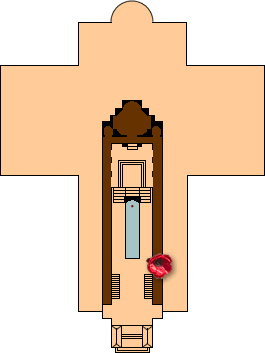
Location on the Roll of Honour The names of all 4 Australian RAAF EE138 crew members are located at panel 107 in the Commemorative Area at the Australian War Memorial, as indicated by the poppy on the plan below:
Further information concerning the Last Post Ceremony can be found on the AWM website: |
||||||||||||||||||||||||||||||||||||||||||||||||||||
Contact Us | ©2008-2015 |
|||||||||||||||||||||||||||||||||||||||||||||||||||||


















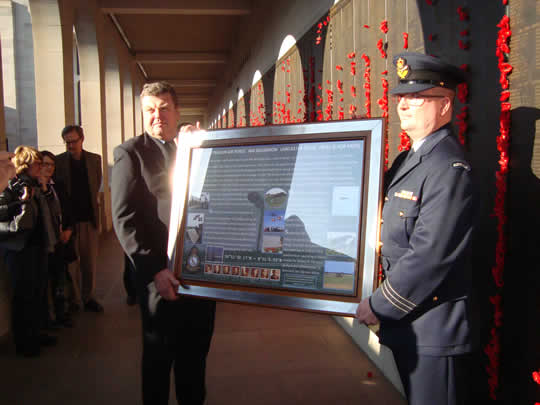
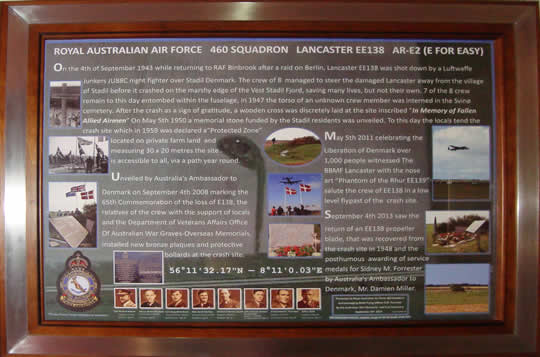 Pictured left: RAAF 460 CO WGCDR Nathan Klohs & Mr Ole Neustrup from the Danish Embassy with the Lancaster EE138 460 Squadron Panel. GPCAPT John Ibbotson stands in background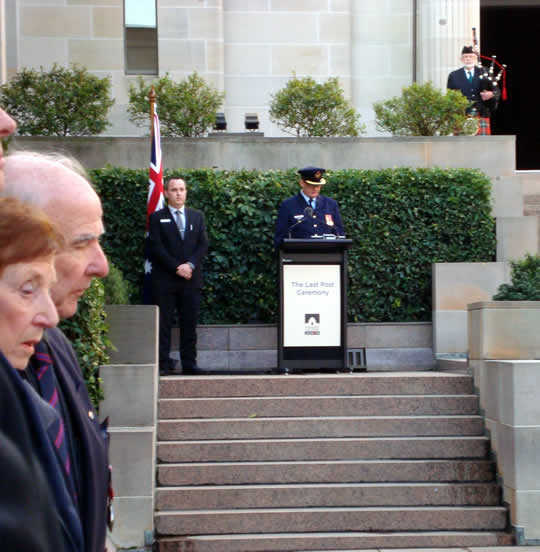
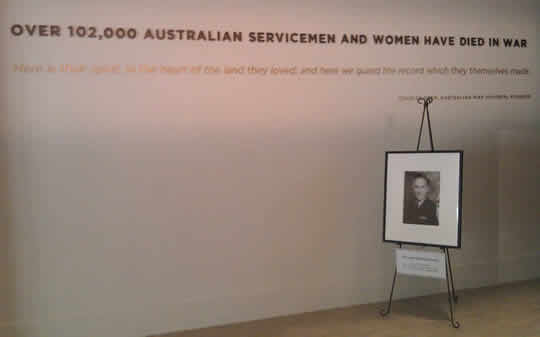 Above: photo of RAAF FO SM Forrester displayed in the AWM foyer on 4th Sept 2015
 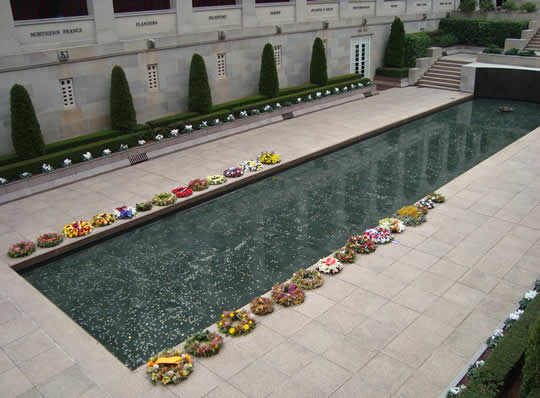 Above: Wreathes surround the AWM Pool of Reflection
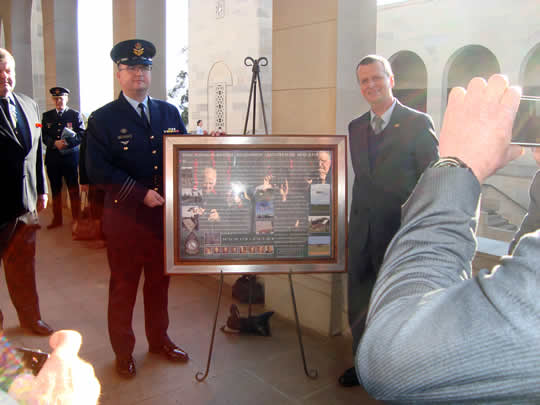
 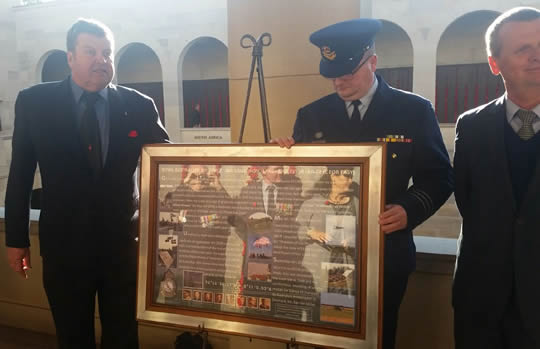 From Left: Peter Forrester, RAAF 460 CO WGCDR Nathan Klohs & Mr Ole Neustrup from the Danish Embassy with the Lancaster EE138 460 Squadron Panel.
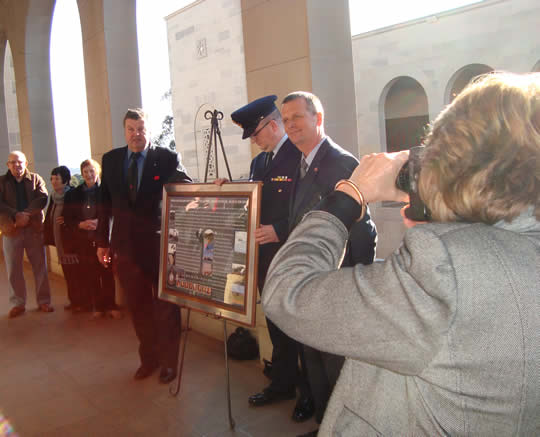 From rear: Peter Ryan, Carol Ryan, Olive Spence, Peter Forrester WGCDR Nathan Klohs & Mr Ole Neustrup from the Danish Embassy with the Lancaster EE138 460 Squadron Panel.
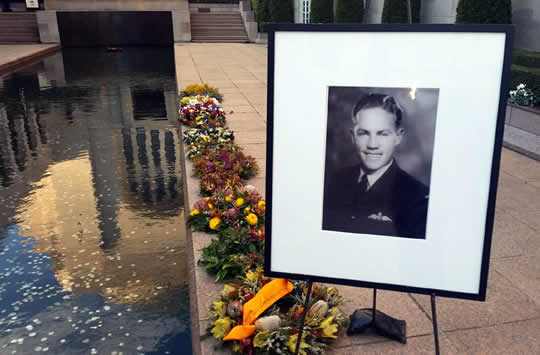 Above and right: Portrait of RAAF FO Sidney Forrester at the AWM Pool of Reflection during the Last Post Ceremony.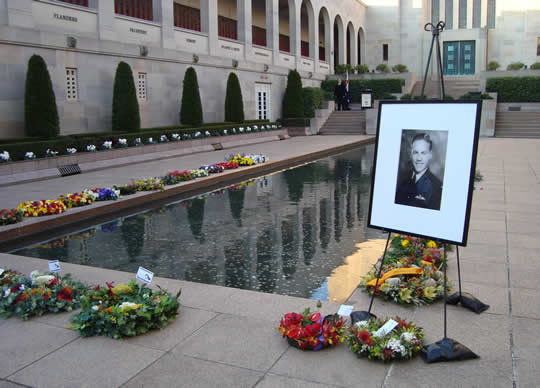
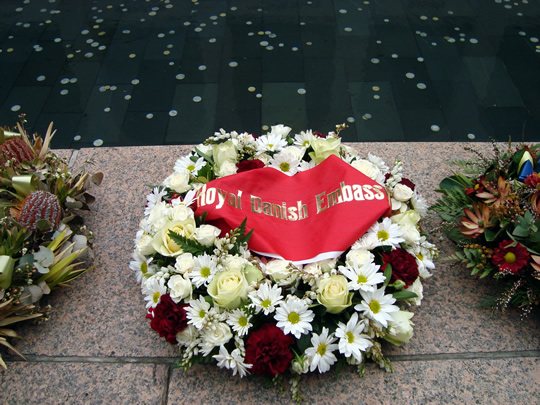
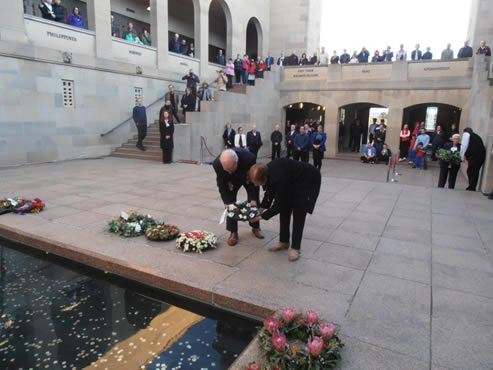 Left and above: Wreathes were placed by Mr. Ole Neustrup Deputy Head of Mission – Danish Embassy, Forrester family, Kelaher family, Carthew family, Walsh family and all EE138 RAF crew families. Bob Spence on behalf of family & EE132 crew, 460 Veterans and Friends Group, the War Widows Guild of Queensland.
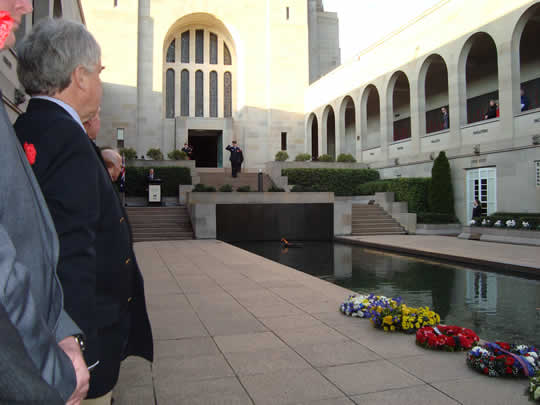 Above: GPCAPT John Ibbotson recites The Ode; Don Stewart stands to the left.
 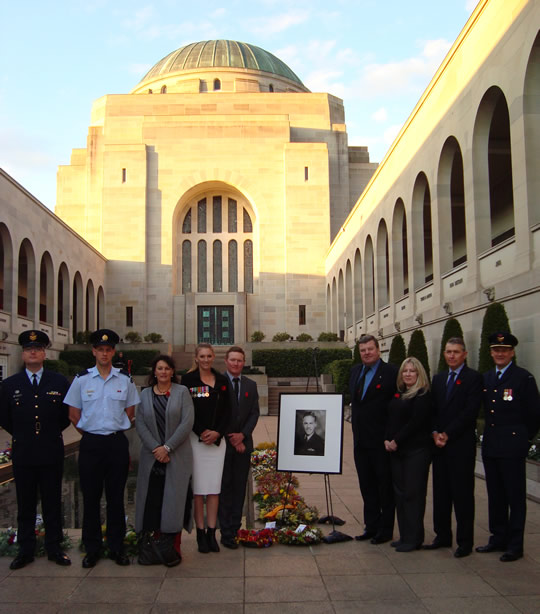 Above left to right: RAAF 460 Squadron CO WGCDR Nathan Klohs, 460 Squadron AC Andrew Ryan, Karen Forrester, Amy Forrester (wearing SM Forrester Service Medals) William Forrester, Peter Forrester, Jo Forrester, Mark Forrester, RAAF GPCAPT John Ibbotson
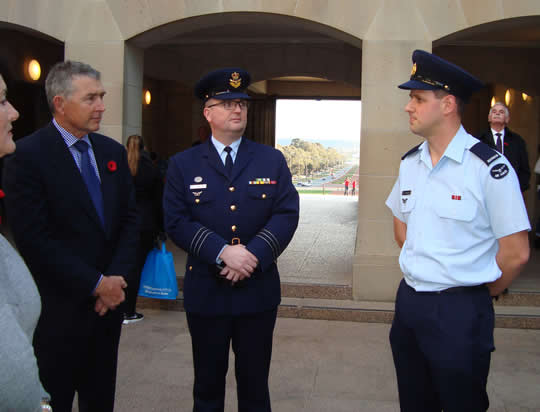 Above left to right: Karen Forrester, Mark Forrester, RAAF 460 Squadron CO WGCDR Nathan Klohs, 460 Squadron AC Andrew Ryan, John Walsh in the background.
 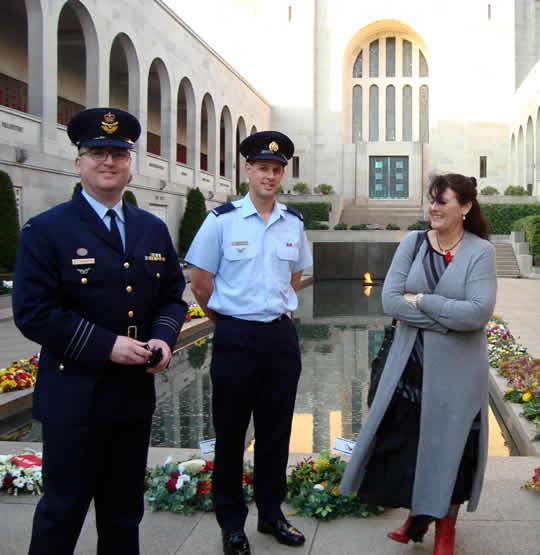 Above left to right: RAAF 460 Squadron CO WGCDR Nathan Klohs, 460 Squadron AC Andrew Ryan, Karen Forrester.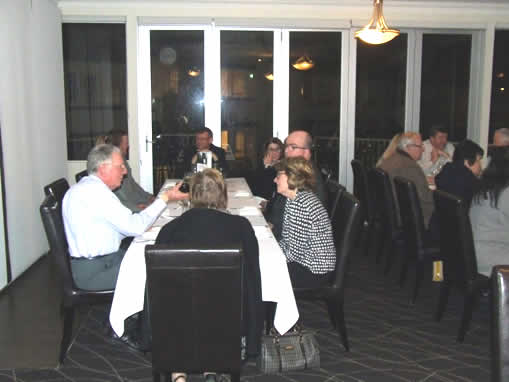
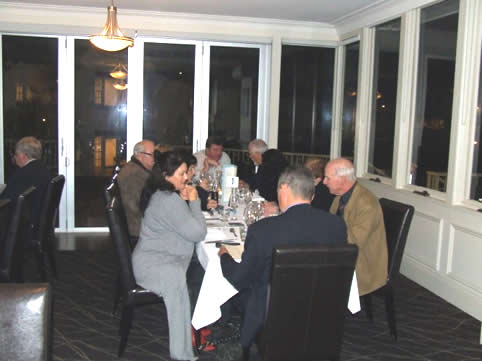 Left and above: Dinner was enjoyed at the Canberra Mercure Hotel dining room, where Forrester, Kelaher, Carthew, Walsh families along with friends and the family members of Oakeshott and Spence attended. Also attending were representatives of the Department of Veteran Affairs – Overseas War Graves along with 460 CO WGCDR Nathan Klohs, RAAF GPCAPT John Ibbotson and his wife.